Slippery road sign: what it means
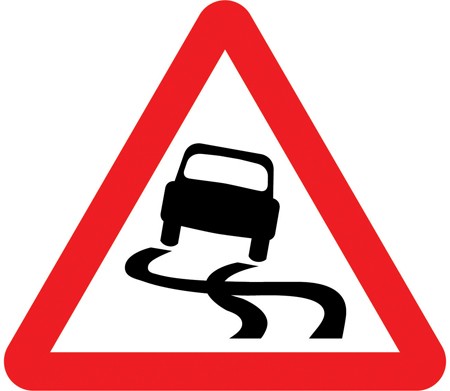
The slippery road sign warns that the road surface ahead may be slippery. Slow down and brake, steer and accelerate gently.
Last checked against the sources: · Report a mistake
What it means
On a slippery surface your tyres have less grip, so you need more distance to stop. Stopping distances will be at least double in wet weather (rule 227) and can be ten times greater on icy or snowy roads (rule 230).
Avoid sudden actions; on ice, brake and accelerate very gently (rule 231).
Where you see it
Before lengths of road where the surface is likely to be slippery.
A common mistake
Keeping your normal speed and gap. Rule 126 says the gap to the vehicle in front should be at least doubled on wet roads.
Quick quiz
In wet weather, how do stopping distances compare with a dry road?
- About the same
- At least double
- About half
Show answer
B. At least double. Rule 227: in wet weather, stopping distances will be at least double those on dry roads. Source: The Highway Code, rule 126, GOV.UK; The Highway Code, rule 227, GOV.UK; The Highway Code, rule 230, GOV.UK; The Highway Code, rule 231, GOV.UK; Know your traffic signs: warning signs, GOV.UK; The Highway Code: traffic signs, GOV.UK; Traffic sign images, Department for Transport, GOV.UK
Compare with
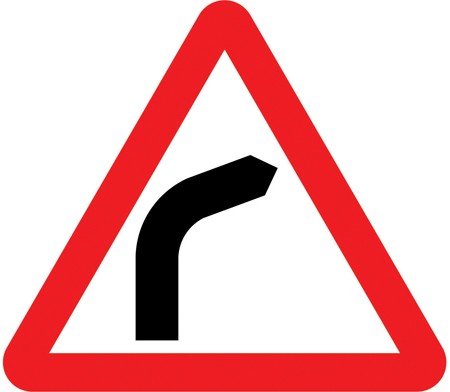 Bend ahead signThe road bends ahead, here to the right.
 Other danger signA hazard ahead; the plate says what it is.
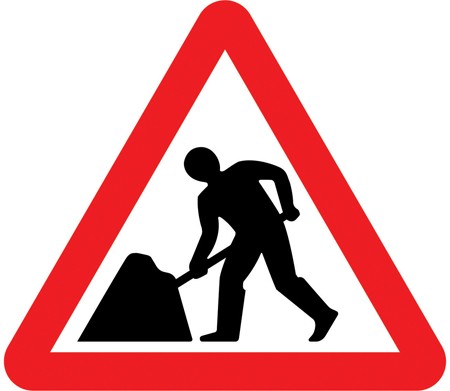 Road works signRoad works ahead.
Next in warning signs: Other danger sign. See all warning signs or the full road signs list.
Want to test someone else? Play a road-sign quiz with friends and family.
Sources
- The Highway Code, rule 126, GOV.UK
- The Highway Code, rule 227, GOV.UK
- The Highway Code, rule 230, GOV.UK
- The Highway Code, rule 231, GOV.UK
- Know your traffic signs: warning signs, GOV.UK
- The Highway Code: traffic signs, GOV.UK
- Traffic sign images, Department for Transport, GOV.UK
Contains public sector information licensed under the Open Government Licence v3.0. Traffic sign images are Crown copyright, from the Department for Transport. Sources and image credits.