Free mock theory test: 50 practice questions
50 questions across all 14 topics, scored against 43 out of 50. Hazard perception is not included.
Checked against GOV.UK · Report a mistake
Mock test 1
-
Alertness
Which of these does the Highway Code list as a distraction to avoid while driving?
- AListening for emergency sirens
- BChecking your mirrors
- CGlancing at your speedometer
- DEating or drinking
Answer and reason
D. Eating or drinking. Eating and drinking are distractions; keep your full attention on the road. Source: The Highway Code, rule 148
-
Alertness
A driver passed their first driving test eight months ago. They are caught holding and using a phone to take a photograph while driving. Which outcome does GOV.UK describe for this offence?
- A6 penalty points and a £200 fine, with their licence kept for a first offence
- B3 penalty points, a £200 fine and permission to keep their licence
- C6 penalty points, a £200 fine and loss of their licence
- DA £200 fine without points, since the phone was used only as a camera
Answer and reason
C. 6 penalty points, a £200 fine and loss of their licence. Hand-held phone use can bring 6 points and a £200 fine; drivers who passed in the last 2 years also lose their licence. Source: GOV.UK: Using a phone, sat nav or other device when driving - Penalties
-
Alertness
You are parked at the kerb and preparing to move off. All your mirrors show clear road. Why should you also look round before moving?
- ALooking round is only needed when a mirror shows approaching traffic
- BLooking round replaces the need to judge whether moving off is safe
- CThere are blind spots that your mirrors cannot show
- DClear mirrors give you priority, and looking round confirms it
Answer and reason
C. There are blind spots that your mirrors cannot show. Before moving off, look round to check blind spots as well as using all your mirrors. Source: The Highway Code, rule 159
-
Attitude
On a dry high-speed road, a car overtakes you and moves into the space ahead. Your following gap is now less than two seconds. What should you do?
- AKeep the smaller gap until the car leaves your lane
- BKeep the smaller gap because the other driver created it
- CAccelerate towards the car to discourage another overtake
- DDrop back to restore at least a two-second gap
Answer and reason
D. Drop back to restore at least a two-second gap. If an overtaking vehicle pulls into your gap, drop back to maintain a two-second gap. Source: The Highway Code, rule 168; The Highway Code, rule 126
-
Attitude
You have stopped at a zebra crossing for someone waiting on the pavement. They look towards you but stay where they are. How should you respond?
- AFlash your headlights to invite them across
- BGive a short horn sound to invite them across
- CWait patiently without beckoning them across
- DWave them across to remove their uncertainty
Answer and reason
C. Wait patiently without beckoning them across. At zebra crossings, wait patiently and avoid inviting people across with gestures, lights or the horn. Source: The Highway Code, rule 195
-
Attitude
You are in slow-moving traffic. What should you do to help an emergency vehicle get past?
- ALeave space so you can manoeuvre
- BPull close to the car in front
- CMove into the left lane to overtake
- DDrive onto the hard shoulder
Answer and reason
A. Leave space so you can manoeuvre. Leave enough space to manoeuvre if an emergency vehicle needs to get past. Source: The Highway Code, rule 151
-
Safety and your vehicle
You have parked safely on a public road and will wait in the car for five minutes. You are outside the traffic flow and are not diagnosing a fault. What should you do to reduce emissions and noise?
- ASwitch off only when you leave the vehicle
- BKeep the engine idling throughout your wait
- CApply the parking brake and switch off
- DRaise the engine speed for the whole wait
Answer and reason
C. Apply the parking brake and switch off. Generally, when stationary for more than a couple of minutes, apply the parking brake and switch off the engine. Source: The Highway Code, rule 123
-
Safety and your vehicle
You press down on the front corner of your parked car and let go. It keeps bouncing for a while. What does this suggest?
- AThe tyre pressure is too high
- BThe shock absorbers are worn
- CThe steering needs alignment
- DThe brake fluid is low
Answer and reason
B. The shock absorbers are worn. A car that keeps bouncing after being pushed down has worn shock absorbers. Source: The Highway Code, Annex 6: Other problems
-
Safety and your vehicle
Where on a car tyre must the tread be at least 1.6 mm deep?
- AAcross the central half, for the whole circumference
- BAcross the central three-quarters, all the way round
- CAcross the outer three-quarters, all the way round
- DAcross the full width, at one point on the circumference
Answer and reason
B. Across the central three-quarters, all the way round. Car tyres need at least 1.6 mm of tread across the central three-quarters and around the entire circumference. Source: The Highway Code, Annex 6, Vehicle maintenance: Tyres
-
Safety margins
In fog, you can see only a short stretch of clear road ahead. The rear lights of another car are visible farther away. What should determine your speed?
- AKeeping close enough to follow the other car's lights
- BMaintaining the speed you used before the fog
- CMatching the speed of the visible rear lights
- DStopping well within the distance you see clearly
Answer and reason
D. Stopping well within the distance you see clearly. In fog, you should be able to stop well within the distance you can see clearly; rear lights can mislead. Source: The Highway Code, rule 235
-
Safety margins
During heavy rain, your steering becomes unresponsive as water prevents the tyres gripping the road. How should you reduce speed?
- AMake repeated sharp turns while maintaining speed
- BBrake sharply to push the tyres through the water
- CEase off the accelerator and slow gradually
- DKeep accelerating until the steering responds again
Answer and reason
C. Ease off the accelerator and slow gradually. If water makes the steering unresponsive, ease off the accelerator and slow down gradually. Source: The Highway Code, rule 227
-
Safety margins
At 50 mph, what is the thinking distance shown in the Highway Code's stopping-distance guide?
- A21 metres
- B15 metres
- C9 metres
- D18 metres
Answer and reason
B. 15 metres. Rule 126's diagram shows 15 metres of thinking distance at 50 mph. Source: The Highway Code, rule 126, Typical stopping distances diagram: 50 mph
-
Safety margins
You are driving on a road that may be icy. Which of these is a sign that your vehicle is losing its grip on ice?
- AThe steering feels heavier and the tyres make more noise
- BThe steering feels unresponsive and the tyres go quiet
- CThe tyres make a loud rumbling noise
- DThe steering responds normally and tyre noise increases
Answer and reason
B. The steering feels unresponsive and the tyres go quiet. Rule 231: on ice the steering may feel unresponsive and tyres make almost no noise. Source: The Highway Code, rule 231
-
Hazard awareness
You are following a slow-moving car through a residential stretch with traffic-calming chicanes. The road briefly widens between two chicanes. What should you do about overtaking?
- AOvertake in the wider section before the next chicane
- BOvertake if the car ahead is below the speed limit
- COvertake after signalling to warn the driver ahead
- DStay behind while within the traffic-calming stretch
Answer and reason
D. Stay behind while within the traffic-calming stretch. Do not overtake moving road users within a stretch of traffic-calming measures. Source: The Highway Code, rule 153
-
Hazard awareness
A pedestrian stands at the kerb ahead, looking away from your approaching car. What should you anticipate?
- AThey may step into the road without seeing you
- BThey have noticed you even though they are looking away
- CThey will always turn towards you before stepping out
- DThey will stay on the pavement until traffic stops
Answer and reason
A. They may step into the road without seeing you. Pedestrians looking the other way may step into the road without seeing you. Source: The Highway Code, rule 146
-
Hazard awareness
You are following a motorcyclist on a road with drain covers and oily patches. Why might the rider suddenly change direction?
- ATo avoid the poor road surface
- BTo let you overtake them safely
- CTo read a direction road sign
- DTo test their brakes are working
Answer and reason
A. To avoid the poor road surface. Riders may suddenly avoid drain covers and oily, wet or icy patches. Source: The Highway Code, rule 213
-
Hazard awareness
You are driving on a country road towards a turning that is partly hidden by hedges. Why should you reduce your speed?
- AYou must stop and sound your horn at hidden turnings
- BCountry roads have a 30 mph limit near every turning
- CFarm vehicles may emerge, or there may be mud on the road
- DTraffic from hidden turnings always has priority
Answer and reason
C. Farm vehicles may emerge, or there may be mud on the road. On country roads, slow down for partly hidden turnings and be ready for farm vehicles or mud on the road. Source: The Highway Code, rule 154
-
Vulnerable road users
A horse rider keeps to the left on a roundabout and gives a right-arm signal while approaching an exit. What intention should you allow for?
- AContinuing around past that exit
- BStopping to let all following traffic pass
- CMoving immediately into the innermost lane
- DLeaving at that exit despite the right signal
Answer and reason
A. Continuing around past that exit. Horse riders may keep left on roundabouts and signal right across exits to show they are continuing around. Source: The Highway Code, rule 55; The Highway Code, rule 186
-
Vulnerable road users
A Class 3 mobility scooter is travelling on the road at dusk. What should you remember?
- AIt is limited to 8 mph and may be hard to see
- BIt has priority over your vehicle
- CIt can keep up with the speed of traffic
- DIt must not be used on the road after dusk
Answer and reason
A. It is limited to 8 mph and may be hard to see. A Class 3 mobility scooter is limited to 8 mph and may be hard to see, so allow for it. Source: The Highway Code, rule 41; The Highway Code, rule 43
-
Vulnerable road users
You are overtaking a cyclist at 40 mph. What clearance should you leave?
- AMore than 1.5 metres
- B1.5 metres is always enough
- CAt least half a metre
- DOne metre
Answer and reason
A. More than 1.5 metres. Leave more than 1.5 metres when overtaking cyclists at speeds above 30 mph. Source: The Highway Code, rule 163
-
Vulnerable road users
You are about to leave a roundabout and a cyclist is still travelling around it on your left. What should you do?
- AGive way and let the cyclist pass first
- BLeave as normal, the cyclist must give way
- CSpeed up to leave before the cyclist
- DSound your horn and leave anyway
Answer and reason
A. Give way and let the cyclist pass first. Do not cut across cyclists going around a roundabout; give way to them. Source: The Highway Code, rule H3
-
Other types of vehicle
You are stopped at a red traffic light when an ambulance using blue lights approaches from behind. Moving across the stop line would break the signal. How should you respond?
- AEnter the junction slowly if other drivers appear to be waiting
- BKeep obeying the signal while assessing a safe way to help
- CMove across the line because blue lights override your red signal
- DDrive onto the pavement to create a route past your car
Answer and reason
B. Keep obeying the signal while assessing a safe way to help. Let emergency vehicles pass safely while continuing to comply with traffic signs and signals. Source: The Highway Code, rule 219; The Highway Code, rule 109
-
Other types of vehicle
A tram ahead stops to pick up passengers at a stop without a platform. There is space between it and the left-hand kerb, but no alternative route is signed. What should you do?
- APass on the left if passengers have yet to step into the road
- BDrive slowly through the gap while warning passengers with your horn
- CWait behind the tram until it moves off
- DOvertake on the right after checking for approaching traffic
Answer and reason
C. Wait behind the tram until it moves off. At a platform-free tram stop, wait until the tram moves off if no alternative route is signed. Source: The Highway Code, rule 303
-
Other types of vehicle
Your lane is queuing beside an empty bus lane. Its operating period is in force, and the signs give your car no permission to use it. You want to continue along the road. What should you do?
- AUse the bus lane until a bus appears
- BEnter the bus lane if you keep moving
- CStay out of the bus lane
- DUse the bus lane while traffic is queuing
Answer and reason
C. Stay out of the bus lane. Unless indicated otherwise, you should stay out of a bus lane during its operating period. Source: The Highway Code, rule 141
-
Vehicle handling
You are waiting at a level crossing with no barriers. A train passes, but the red lights continue to flash. What should you do?
- AWait because another train will be passing soon
- BMove onto the crossing to improve your view
- CCross slowly while watching along the railway
- DCross once the rear of the train is out of sight
Answer and reason
A. Wait because another train will be passing soon. Wait while red crossing lights keep flashing after a train passes; another train will be passing soon. Source: The Highway Code, rule 293
-
Vehicle handling
You are on a straight stretch of icy road approaching a bend. You need to reduce speed before turning. Which approach should you use?
- AKeep your speed on the straight, then brake firmly while turning
- BBrake progressively on the straight, then steer smoothly
- CBegin turning first, then use short bursts of heavy braking
- DAccelerate towards the bend, then turn sharply through it
Answer and reason
B. Brake progressively on the straight, then steer smoothly. On ice, brake progressively before a bend, then steer smoothly and avoid sudden actions. Source: The Highway Code, rule 231
-
Vehicle handling
You are driving in fog and a vehicle is following too closely behind you. Which of these should you **not** do?
- AAccelerate to get away from it
- BKeep a safe distance from the vehicle in front
- CUse your brake lights to warn when slowing down
- DCheck your mirrors before you slow down
Answer and reason
A. Accelerate to get away from it. In fog, do not accelerate to get away from a vehicle that is too close behind (rule 235). Source: The Highway Code, rule 235
-
Motorway rules
A passenger asks you to let them out on a motorway verge near a path. There is no emergency. How should you respond?
- AStop on the verge if the passenger can leave quickly
- BUse an emergency area to let the passenger out
- CStop on the hard shoulder with your hazard lights on
- DContinue without setting the passenger down
Answer and reason
D. Continue without setting the passenger down. You must not pick up or set down anyone on a motorway except in an emergency. Source: The Highway Code, rule 272
-
Motorway rules
You see a motorway overhead signal showing 60 inside a red circle. What does this mean?
- AThe limit applies only to goods vehicles
- B60 mph is advised but not compulsory
- CYou must not exceed 60 mph
- DYou must drive at least 60 mph
Answer and reason
C. You must not exceed 60 mph. A speed limit shown inside a red circle is mandatory, so you must not exceed it. Source: The Highway Code, rule 261; Know Your Traffic Signs: Motorway signals and variable signs
-
Motorway rules
On a motorway with three or more lanes, which vehicle is normally banned from the right-hand lane?
- AA car towing a trailer
- BA car carrying four passengers
- CA motorcycle over 500 cc
- DA solo car
Answer and reason
A. A car towing a trailer. Vehicles towing trailers must not use the right-hand lane where there are 3 or more lanes, except in prescribed cases. Source: The Highway Code, rule 265
-
Motorway rules
A sign on a motorway shows red flashing lights and the closure of all lanes. What must you do?
- AUse the hard shoulder to get past the closure
- BDrive past slowly in the left-hand lane
- CTurn around and drive back along the motorway
- DStop and not go beyond the sign in any lane
Answer and reason
D. Stop and not go beyond the sign in any lane. Do not pass an all-lanes closure sign or use the hard shoulder unless a police or traffic officer directs you. Source: The Highway Code, rule 258
-
Rules of the road
You want to cross a dual carriageway. Its central reservation is too shallow to shelter the full length of your car. Traffic on the nearer carriageway clears, but traffic continues on the farther one. What should you do?
- AEnter the reservation and ask farther traffic to let you out
- BCross the nearer carriageway and edge into the farther one
- CCross halfway and wait with the rear of your car protruding
- DWait for a safe gap across both carriageways
Answer and reason
D. Wait for a safe gap across both carriageways. If the central reservation cannot shelter your full vehicle, wait until you can cross both carriageways in one go. Source: The Highway Code, rule 173
-
Rules of the road
Which of these places does the Highway Code list as somewhere you should not stop or park?
- AIn an off-street car park
- BAt or near a taxi rank
- CIn a marked parking bay
- DIn a quiet lay-by
Answer and reason
B. At or near a taxi rank. Do not stop or park at or near a taxi rank, except when forced to by stationary traffic. Source: The Highway Code, rule 243
-
Rules of the road
You are about to turn left into a side road. How should you position your car as you make the turn?
- AIn the middle of your side of the road
- BAs close to the left as is safe and practicable
- CSwing out to the right before the turn
- DTowards the centre line until you reach the turn
Answer and reason
B. As close to the left as is safe and practicable. When turning left, keep as close to the left as is safe and practicable. Source: The Highway Code, rule 183
-
Rules of the road
You want the first exit to the left at a roundabout. No signs or road markings say otherwise. How should you approach?
- ARight lane, signalling right
- BLeft lane, signalling left
- CRight lane, signalling left
- DLeft lane, signalling right
Answer and reason
B. Left lane, signalling left. For the first exit left, approach in the left-hand lane and signal left unless signs or markings say otherwise. Source: The Highway Code, rule 186
-
Rules of the road
You are on a three-lane dual carriageway and have just overtaken using the right-hand lane. The road ahead is clear. What should you do next?
- AReturn to the middle lane, then the left-hand lane
- BStay in the right-hand lane until your exit
- CReturn to the left-hand lane only if it gets busy
- DStay in the middle lane for the rest of the journey
Answer and reason
A. Return to the middle lane, then the left-hand lane. After overtaking, return through the middle lane to the left-hand lane when it is safe to do so. Source: The Highway Code, rule 138
-
Road and traffic signs
You are waiting to turn left. The signals controlling your lane show a red light and an illuminated green left arrow. The route to your left is clear. What may you do?
- ATurn left
- BMove only when the full green appears
- CProceed straight ahead instead
- DTurn right if that route is clear
Answer and reason
A. Turn left. A green arrow permits travel in its direction when clear, even while other lights show red. Source: The Highway Code: Light signals controlling traffic
-
Road and traffic signs
You want to park on a road that has zig-zag markings before and after a pedestrian crossing. What must you do?
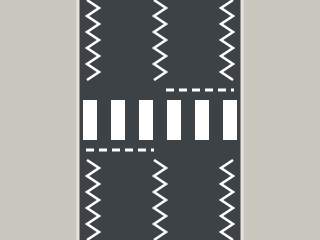
- APark on the zig-zags after the crossing
- BStop on the crossing itself briefly
- CStop on the zig-zags for a short time only
- DPark outside the zig-zags where parking is allowed
Answer and reason
D. Park outside the zig-zags where parking is allowed. You must not park anywhere within the zig-zag markings at a crossing. Source: Know Your Traffic Signs: Pedestrian, cycle and equestrian crossings
-
Road and traffic signs
On a road that is not a red route, a single yellow line and yellow kerb marks are accompanied by a plate prohibiting waiting and loading at the current time. There are no other restrictions and stopping would cause no danger or obstruction. What may you stop to do?
- ALet a passenger get out
- BWait for a passenger to arrive
- CUnload a heavy box
- DLoad a pre-paid purchase
Answer and reason
A. Let a passenger get out. Waiting and loading restrictions still allow stopping while passengers board or alight. Source: The Highway Code: Road markings; Know Your Traffic Signs: On-street parking control signs and road markings
-
Road and traffic signs
A passenger is ready to leave your car outside a school. Yellow zig-zags mark the entrance, and an upright sign prohibits stopping there during the current period. Where should you set the passenger down?
- AOn the zig-zags while the engine runs
- BOn the zig-zags if the passenger is ready
- CAt another place where stopping is allowed
- DOn the zig-zags for a brief drop-off
Answer and reason
C. At another place where stopping is allowed. During the signed restriction, stopping on school entrance zig-zags is banned, including passenger drop-offs. Source: Know Your Traffic Signs: On-street parking control signs and road markings; The Highway Code, rule 238
-
Road and traffic signs
You are approaching a junction with a 'STOP' sign and a solid white line across the road. What must you do before you enter the major road?
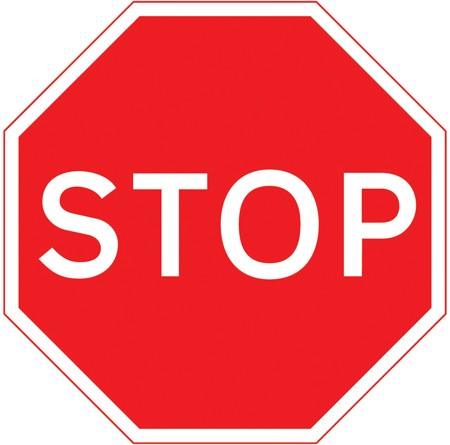
- ATreat it the same as a give way sign
- BSlow down and drive out if nothing is coming
- CStop at the line and wait until the way is clear
- DStop only if there is traffic on the major road
Answer and reason
C. Stop at the line and wait until the way is clear. At a STOP sign you must stop at the line and only go when the way is clear. Source: Know Your Traffic Signs: Regulatory signs
-
Essential documents
You plan to keep your car untaxed and unused for several months. Which arrangement meets the stated off-road notification requirement?
- ALeave it on a public road and declare SORN
- BLeave it on a public road and retain insurance instead of tax
- CKeep it off the public road and let its tax lapse without notifying DVLA
- DKeep it off the public road and declare SORN
Answer and reason
D. Keep it off the public road and declare SORN. To keep your vehicle untaxed, keep it off the public road and declare SORN to DVLA. Source: The Highway Code, Annex 3: Vehicle Excise Duty (VED); Statutory Off-Road Notification (SORN)
-
Essential documents
You are arranging unpaid practice in a manual car. Each person below is over 25 and has held their stated full UK licence for four years. Who meets the licence requirement to supervise you?
- ASomeone with an automatic car licence and manual lessons
- BSomeone with an automatic-only car licence
- CSomeone with a motorcycle licence but no car licence
- DSomeone with a full manual car licence
Answer and reason
D. Someone with a full manual car licence. A supervisor must be qualified for the type of car you drive, including a manual licence for a manual car. Source: GOV.UK: Driving lessons and learning to drive — Practising with family or friends
-
Essential documents
You are caught driving uninsured on a public road. What fixed penalty could the police give you?
- A£100 and 3 penalty points
- B£500 and 6 penalty points
- C£300 and no penalty points
- D£300 and 6 penalty points
Answer and reason
D. £300 and 6 penalty points. Driving uninsured can bring a £300 fixed penalty and 6 penalty points. Source: GOV.UK: Vehicle insurance - Driving without insurance
-
Incidents, accidents and emergencies
You have stopped in an emergency area on a motorway. How should you rejoin the carriageway?
- ADrive along the hard shoulder until traffic clears
- BSignal and join as soon as you see a small gap
- CUse the emergency telephone and follow the operator's advice
- DBuild up speed and pull straight out when clear
Answer and reason
C. Use the emergency telephone and follow the operator's advice. From an emergency area you must use the emergency telephone and follow the operator's advice to rejoin. Source: The Highway Code, rule 278
-
Incidents, accidents and emergencies
A box falls from your car onto a motorway. You reach a place of relative safety. What should you do about the box?
- ALeave it in place and call 999
- BWait for a gap, then walk back and collect it
- CAsk a passenger to retrieve it while you watch traffic
- DReverse along the motorway until you reach it
Answer and reason
A. Leave it in place and call 999. Leave motorway obstructions for the emergency services; stop somewhere relatively safe and call 999. Source: The Highway Code, rule 280; The Highway Code, rule 263
-
Incidents, accidents and emergencies
An adult casualty is unresponsive and not breathing normally after a collision. When you start CPR, how should you give chest compressions?
- AGently press the upper chest once a second
- BPress firmly once every five seconds
- CPress hard and fast in the centre, about 5 to 6 cm deep
- DPress the chest only if you are trained
Answer and reason
C. Press hard and fast in the centre, about 5 to 6 cm deep. For an adult, press the centre of the chest hard and fast, about 5 to 6 cm deep and twice a second. Source: The Highway Code, Annex 7, Emergency care (Breathing)
-
Vehicle loading
You join a motorway while towing a caravan with your car. No lower speed limit is displayed. What is the maximum speed allowed for your combination?
- A30 mph
- B50 mph
- C70 mph
- D60 mph
Answer and reason
D. 60 mph. A car towing a caravan has a motorway speed limit of 60 mph. Source: The Highway Code, rule 124: Speed limits table
-
Vehicle loading
An 11-year-old child is 130 cm tall. You are taking them on a planned journey in your private car, with room for the correct child seat. What restraint must they use?
- AAn adult seat belt alone, because the journey is planned
- BAn adult seat belt alone, because they are older than 3
- CA suitable child car seat or booster seat
- DNo restraint if an adult sits beside them in the rear
Answer and reason
C. A suitable child car seat or booster seat. Children normally need a child seat until age 12 or 135 cm tall, whichever comes first. Source: GOV.UK: Child car seats: the law - Using a child car seat or booster seat
-
Vehicle loading
You need to take a 5-year-old child, 110 cm tall, on an unexpected, necessary journey over a short distance in your private car. The correct child seat is unavailable, but a rear seat has an adult belt. What does the stated exception allow?
- AThe child may use the adult belt on the rear seat
- BThe child may sit on an adult's lap without a belt
- CThe child may travel on the rear seat without any belt
- DThe child may share the driver's belt on the front seat
Answer and reason
A. The child may use the adult belt on the rear seat. With no suitable child seat, a child aged 3+ may use a rear adult belt on an unexpected, necessary, short trip. Source: GOV.UK: Child car seats: the law - Unexpected journeys; GOV.UK: Seat belts: the law - Overview
Choose practice or test mode, then answer one question at a time. Nothing you pick is saved or sent anywhere.
Practise: answers as you go shows the answer after each question. Timed test · 57 min lets you change answers and shows the answers at the end.
Keep practising for free
- You’ll be able to play live with friends, free
- Pro will bring back your mistakes until you get them right
- It will be one purchase, no subscription
The DriveQuiz app for iPhone and Android is coming soon.
Our own questions, not the DVSA’s: drafted with AI help from The Highway Code and GOV.UK, checked against them, not reviewed by a driving instructor (how we write them).
How these mocks compare with the real test
| Feature | Real test (GOV.UK) | These mocks |
|---|---|---|
| Questions | 50 | 50, from all 14 topics |
| Pass mark | 43 out of 50 | 43 out of 50 |
| Time | 57 minutes | 57 minutes in test mode; no limit in practice mode |
| Video questions | 3 questions about a short video | None |
| Answers | Your result at the end | At the end in test mode; after each question in practice mode |
The real test also has the hazard perception part, with its own pass mark of 44 out of 75, and you must pass both parts at the same sitting. Read the theory test explained for the rules, the fee and what to take.
Practise by topic
Choose from all 14 theory test topics to work on one area at a time.
What to practise next
- Check your score with the pass-mark checker.
- Highway Code quizzes: stopping distances, roundabouts, motorways and vulnerable road users.
- Road signs quiz: all 41 signs and markings from our sign library, with the official pictures.
Questions about these mocks
How many free mock theory tests are there?
One free 50-question full mock for the UK. The web shows 55 of our 325 checked questions. You can also practise the public sample by topic. Hazard perception is not covered.
Is this the real theory test?
No. The real test is run by the DVSA in Great Britain and the DVA in Northern Ireland, and its questions are not published. These are our own practice questions on the same topics, written from The Highway Code and GOV.UK guidance.
Does it cover hazard perception?
No. Hazard perception is a separate video test with 14 clips, and DriveQuiz does not include it yet. Our hazard perception guide explains how it is scored.
If I score 43 here, will I pass?
We can’t promise that. A mock is a way to find gaps: the real test draws on far more questions, and you also need to pass hazard perception. Use your wrong answers as a list of what to read again.
How is test mode different?
Test mode works like the real multiple-choice part: 57 minutes on the clock, you can go back and change answers, and you see your score and the answers at the end. Practice mode shows the answer and the reason after each question.
Sources
- Child car seats: the law, GOV.UK
- Child car seats: the law, GOV.UK
- Driving lessons and learning to drive, GOV.UK
- Know Your Traffic Signs: Motorway signs, signals and road markings, GOV.UK
- Know Your Traffic Signs: On-street parking control signs and road markings, GOV.UK
- Know Your Traffic Signs: Pedestrian, cycle and equestrian crossings, GOV.UK
- Know Your Traffic Signs: Regulatory signs, GOV.UK
- Seat belts: the law, GOV.UK
- The Highway Code: Annex 3. Motor vehicle documentation and learner driver requirements, GOV.UK
- The Highway Code: Annex 6. Vehicle maintenance, safety and security, GOV.UK
- The Highway Code: Annex 7. First aid on the road, GOV.UK
- The Highway Code: Breakdowns and incidents (275 to 287), GOV.UK
- The Highway Code: Driving in adverse weather conditions (226 to 237), GOV.UK
- The Highway Code: General rules, techniques and advice for all drivers and riders (103 to 158), GOV.UK
- The Highway Code: Introduction, GOV.UK
- The Highway Code: Light signals controlling traffic, GOV.UK
- The Highway Code: Motorways (253 to 274), GOV.UK
- The Highway Code: Road markings, GOV.UK
- The Highway Code: Road users requiring extra care (204 to 225), GOV.UK
- The Highway Code: Road works, level crossings and tramways (288 to 307), GOV.UK
- The Highway Code: Rules about animals (47 to 58), GOV.UK
- The Highway Code: Rules for users of powered wheelchairs and mobility scooters (36 to 46), GOV.UK
- The Highway Code: Using the road (159 to 203), GOV.UK
- The Highway Code: Waiting and parking (238 to 252), GOV.UK
- Using a phone, sat nav or other device when driving, GOV.UK
- Vehicle insurance, GOV.UK
Contains public sector information licensed under the Open Government Licence v3.0. Traffic sign images are Crown copyright, from the Department for Transport. Sources and image credits.