Road and traffic signs theory test questions
5 free questions here · 31 in the app (coming soon)
Checked against GOV.UK · Report a mistake
5 sample road and traffic signs questions
-
Road and traffic signs
You want to park on a road that has zig-zag markings before and after a pedestrian crossing. What must you do?
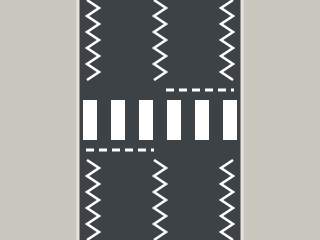
- APark on the zig-zags after the crossing
- BStop on the crossing itself briefly
- CStop on the zig-zags for a short time only
- DPark outside the zig-zags where parking is allowed
Answer and reason
D. Park outside the zig-zags where parking is allowed. You must not park anywhere within the zig-zag markings at a crossing. Source: Know Your Traffic Signs: Pedestrian, cycle and equestrian crossings
-
Road and traffic signs
You are approaching a junction with a 'STOP' sign and a solid white line across the road. What must you do before you enter the major road?
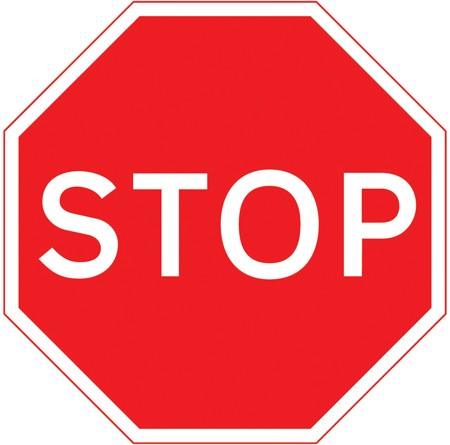
- ATreat it the same as a give way sign
- BSlow down and drive out if nothing is coming
- CStop at the line and wait until the way is clear
- DStop only if there is traffic on the major road
Answer and reason
C. Stop at the line and wait until the way is clear. At a STOP sign you must stop at the line and only go when the way is clear. Source: Know Your Traffic Signs: Regulatory signs
-
Road and traffic signs
You are waiting to turn left. The signals controlling your lane show a red light and an illuminated green left arrow. The route to your left is clear. What may you do?
- ATurn left
- BMove only when the full green appears
- CProceed straight ahead instead
- DTurn right if that route is clear
Answer and reason
A. Turn left. A green arrow permits travel in its direction when clear, even while other lights show red. Source: The Highway Code: Light signals controlling traffic
-
Road and traffic signs
On a road that is not a red route, a single yellow line and yellow kerb marks are accompanied by a plate prohibiting waiting and loading at the current time. There are no other restrictions and stopping would cause no danger or obstruction. What may you stop to do?
- ALet a passenger get out
- BWait for a passenger to arrive
- CUnload a heavy box
- DLoad a pre-paid purchase
Answer and reason
A. Let a passenger get out. Waiting and loading restrictions still allow stopping while passengers board or alight. Source: The Highway Code: Road markings; Know Your Traffic Signs: On-street parking control signs and road markings
-
Road and traffic signs
A passenger is ready to leave your car outside a school. Yellow zig-zags mark the entrance, and an upright sign prohibits stopping there during the current period. Where should you set the passenger down?
- AOn the zig-zags while the engine runs
- BOn the zig-zags if the passenger is ready
- CAt another place where stopping is allowed
- DOn the zig-zags for a brief drop-off
Answer and reason
C. At another place where stopping is allowed. During the signed restriction, stopping on school entrance zig-zags is banned, including passenger drop-offs. Source: Know Your Traffic Signs: On-street parking control signs and road markings; The Highway Code, rule 238
Answer at your own pace. Nothing you pick is saved or sent anywhere.
Keep practising for free
- You’ll be able to play live with friends, free
- Pro will bring back your mistakes until you get them right
- It will be one purchase, no subscription
The DriveQuiz app for iPhone and Android is coming soon.
What this topic covers
This topic is about reading the messages given by signs, signals and road markings. Use the questions to connect what you see on the road with the choices you make.
These are our own practice questions, drafted with AI help and checked against their cited sources. No driving instructor has reviewed them: how we write and check our questions. Hazard perception is not covered.
Read more: Road sign library.
Other theory test topics
Return to the topic question hub or choose another area to practise.
- Alertness5 free questions here · 20 in the app (coming soon)Start ›
- Attitude3 free questions here · 20 in the app (coming soon)Start ›
- Safety and your vehicle4 free questions here · 22 in the app (coming soon)Start ›
- Safety margins5 free questions here · 21 in the app (coming soon)Start ›
- Hazard awareness4 free questions here · 21 in the app (coming soon)Start ›
- Vulnerable road users4 free questions here · 26 in the app (coming soon)Start ›
- Other types of vehicle3 free questions here · 20 in the app (coming soon)Start ›
- Vehicle handling3 free questions here · 23 in the app (coming soon)Start ›
- Motorway rules4 free questions here · 25 in the app (coming soon)Start ›
- Rules of the road5 free questions here · 28 in the app (coming soon)Start ›
- Essential documents3 free questions here · 23 in the app (coming soon)Start ›
- Incidents, accidents and emergencies4 free questions here · 25 in the app (coming soon)Start ›
- Vehicle loading3 free questions here · 20 in the app (coming soon)Start ›
Try a mixed mock theory test
The one free UK mock has 50 questions across the topics. Most of these sample questions also appear in that mock.
Sources
- Know Your Traffic Signs: On-street parking control signs and road markings, GOV.UK
- Know Your Traffic Signs: Pedestrian, cycle and equestrian crossings, GOV.UK
- Know Your Traffic Signs: Regulatory signs, GOV.UK
- The Highway Code: Light signals controlling traffic, GOV.UK
- The Highway Code: Road markings, GOV.UK
- The Highway Code: Waiting and parking (238 to 252), GOV.UK
Contains public sector information licensed under the Open Government Licence v3.0. Traffic sign images are Crown copyright, from the Department for Transport. Sources and image credits.
Continue in the app
This page shows 5 of the 31 road and traffic signs questions in our bank. The DriveQuiz app is coming soon with all 31, and Pro will bring back the ones you get wrong until you get them right.
Read each explanation before moving on. Follow its official source to understand the rule in context, then consider why the other choices would be unsuitable. A short sample can help you identify a point to revisit, but it cannot tell you everything that might be asked in the real test. Use the official reading alongside your practice and return to topics you find difficult.