Free permit practice test: 25 questions for every state
25 questions on signs, signals and rules shared by every state. See the answer and reason as you go.
Checked against the MUTCD · Report a mistake
Permit practice test
-
Pavement markings
A center lane is bordered by solid and broken yellow lines on each side and shows left-turn arrows. What is it for?
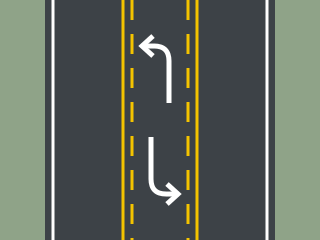
- ABuses and carpools only
- BParking while you run errands
- CLeft turns from either direction
- DPassing slower traffic on both sides
Answer and reason
C. Left turns from either direction. A center lane with left-turn arrows is a two-way left-turn lane for turning left from either direction. Source: MUTCD Section 3B.05 Pavement Markings for Two-Way Left-Turn Lanes
-
Signs
A white sign reads DO NOT PASS. What does it mean?
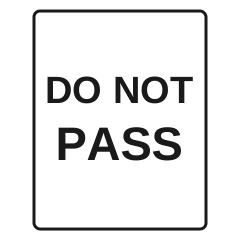
- ADo not overtake other vehicles
- BDo not turn left here
- CDo not park on the shoulder
- DDo not follow too closely
Answer and reason
A. Do not overtake other vehicles. DO NOT PASS means you may not overtake another vehicle in that zone. Source: MUTCD Section 2B.36 DO NOT PASS Sign (R4-1)
-
Signs
A green rectangular sign has white lettering reading CIVIC CENTER and a white arrow pointing right. What information does it provide?
- AA requirement for every vehicle to turn right
- BA warning that the road bends sharply right
- CPermission to turn right without checking traffic
- DDirections to the civic center
Answer and reason
D. Directions to the civic center. Green guide signs provide direction guidance to destinations. Source: MUTCD Section 1D.05 Color Code
-
Traffic signals
A steady green arrow points left while the circular light is red. A pedestrian is still crossing directly in your intended turning path. What must you do?
- ATurn left and stop inside the crosswalk
- BTurn left now; the arrow gives you the right-of-way
- CGo straight instead, since the arrow is on
- DYield to the pedestrian, then turn when safe and permitted
Answer and reason
D. Yield to the pedestrian, then turn when safe and permitted. A green arrow allows the left turn, but you must still yield to pedestrians in the crosswalk. Source: MUTCD Section 4A.03 Meanings of Steady Vehicular Signal Indications
-
Intersections and turns
You plan to turn onto a one-way street. Its permitted traffic direction runs from your left to your right. There are no other turn restrictions. Which turn follows that street’s legal direction?
- AA left turn across the near side of the street
- BA left turn followed by an immediate lane change
- CEither turn if the destination street is empty
- DA right turn
Answer and reason
D. A right turn. Enter a one-way street only in its designated direction of travel. Source: UVC § 11-308(b) One-way roadways and rotary traffic islands (model law)
-
Right-of-way
At a marked crosswalk with no traffic signals, a pedestrian is already crossing in your lane. You have enough distance to stop safely. Which action gives the pedestrian the right-of-way?
- ASteer into the next lane to pass the pedestrian
- BStop and let the pedestrian cross
- CSound your horn and keep your current speed
- DContinue because your road has no stop sign
Answer and reason
B. Stop and let the pedestrian cross. Drivers must yield to pedestrians crossing in their path within an unsignalized crosswalk. Source: UVC § 11-502(a) Pedestrians’ right of way in crosswalks (model law)
-
Sharing the road
A motorcycle is traveling ahead in your lane. There appears to be enough room for your car beside it. How should you treat the motorcycle’s lane space?
- AMove beside it after sounding a brief horn warning
- BShare its lane whenever your car can fit beside it
- CAllow the motorcycle full use of its lane
- DUse its unused lane space when traffic is moving slowly
Answer and reason
C. Allow the motorcycle full use of its lane. A motorcycle is entitled to full use of a lane; a car must not crowd into that space. Source: UVC § 11-1303(a) Operating motorcycles on roadways laned for traffic (model law)
-
Alcohol and drugs
What happens when you mix alcohol with another drug before you drive?
- AThey cancel each other’s effects
- BOnly the alcohol matters
- CThere is no added risk
- DThe effects can get stronger
Answer and reason
D. The effects can get stronger. Mixing alcohol with other drugs can amplify the impairing effects of each, making driving more dangerous. Source: NHTSA: Drug-Impaired Driving, Many Substances Can Impair Driving
-
Speed and space
On a clear, dry highway you drive so slowly that a long line of cars builds up behind you, though no hazard or law requires it. What does the law say?
- AYou must match the fastest car’s speed
- BDo not block the normal flow of traffic
- CYou may drive any slow speed you choose
- DYou must pull over and stop completely
Answer and reason
B. Do not block the normal flow of traffic. Do not drive so slowly that you impede normal traffic, unless the slow speed is needed for safety or to obey the law. Source: UVC § 11-805 Minimum speed regulation (model law)
-
Seat belts and child safety
Every rear seat in your car allows a correct car-seat installation. Which spot is unsafe for a rear-facing child safety seat?
- ABeside a rear-side window
- BThe middle seat in the back row
- CBehind the driver’s seat
- DFront seat, facing an active air bag
Answer and reason
D. Front seat, facing an active air bag. A rear-facing seat must never go in front of an active air bag, whose force can seriously injure a child. Source: NHTSA: Air Bags, The Topic — Protection
-
Night and bad weather
You are using high beams on a dark two-way road. An oncoming vehicle is getting close enough that your high beams could dazzle its driver. What should you do?
- AKeep high beams on until the other driver flashes theirs
- BKeep high beams on and aim your car toward the shoulder
- CSwitch to low beams
- DSwitch to parking lights until the other vehicle passes
Answer and reason
C. Switch to low beams. Dim high beams to low beams to avoid blinding an oncoming driver. Source: California Driver Handbook (California DMV): Signals, Horns, and Headlights: Using Your Headlights; Texas Driver Handbook, Chapter 9: Some Special Driving Situations, Headlights; Florida Driver License Handbook (FLHSMV): Low Visibility; Night Driving
-
Distraction
You drop something on the floor while driving. What should you do?
- AStop in the middle of the lane to get it
- BLook down and grab it in one quick move
- CWait to pick it up until you stop safely
- DReach down quickly while watching the road
Answer and reason
C. Wait to pick it up until you stop safely. Wait to retrieve a dropped object until you can pull over and stop safely; reaching distracts you. Source: NHTSA: Distracted Driving, What Is Distracted Driving?
-
Emergencies
You slept very little, drank coffee, and now begin drifting out of your lane. A designated rest area is just ahead. What is the safest response?
- AKeep driving because the coffee will prevent sleep
- BTurn the music louder and increase your driving speed
- CPull into the rest area and stop to rest
- DOpen the windows and continue until your destination
Answer and reason
C. Pull into the rest area and stop to rest. Coffee alone may not prevent microsleeps; stop in a safe place when sleepiness affects your driving. Source: NHTSA: Drowsy Driving, Short-Term Interventions
-
Lanes
You are on a road with four lanes and two-way traffic, with a center line between the directions. When may you cross that center line?
- AWhenever your side of the road is busy
- BTo use the oncoming lanes as a shortcut past traffic
- CTo pass a slower car ahead of you
- DTo make a safe, permitted left turn into a driveway, alley, or private road
Answer and reason
D. To make a safe, permitted left turn into a driveway, alley, or private road. On a four-lane two-way road, never drive left of center to pass; turning left into a driveway is allowed. Source: UVC § 11-301(c) Drive on right side of roadway - exceptions (model law)
-
Passing
You want to pass a slow truck on a two-lane road, but you are nearing a hill crest where you cannot see oncoming traffic. What should you do?
- APass on the right shoulder instead
- BWait until you can see far enough to pass
- CPass quickly before you reach the crest
- DFollow close behind and pass at the crest
Answer and reason
B. Wait until you can see far enough to pass. Do not pass where your view is blocked, such as near a hill crest, curve, intersection, or crossing. Source: UVC § 11-306(a)(1) Further limitations on driving on left of center of roadway (model law)
-
Highways
You are on a divided highway with a grassy median between the two roadways, and you miss your turn. What may you do?
- ACross the median where the grass is low
- BDrive the wrong way briefly to an opening
- CUse the next crossover marked for emergency vehicles only
- DContinue to an opening or intersection where crossing is permitted, and turn only when safe
Answer and reason
D. Continue to an opening or intersection where crossing is permitted, and turn only when safe. Stay on your roadway until you reach a permitted crossing, and turn only when safe. Source: UVC § 11-311 Driving on divided highways (model law)
-
Traffic signals
A steady yellow left-turn arrow is showing. What does it tell you?
- ALeft turns are now forbidden
- BYou now have the right-of-way to turn
- CThe left-turn movement is ending; prepare to stop
- DThe arrow is about to turn green
Answer and reason
C. The left-turn movement is ending; prepare to stop. A steady yellow arrow warns that the current left-turn movement is ending; prepare to stop. Source: MUTCD Section 4A.03 Meanings of Steady Vehicular Signal Indications
-
Pavement markings
A white arrow painted in your lane curves left. What does it tell you?
- AThis lane is for left turns
- BYou may turn left or go straight
- CThe road curves left up ahead
- DLeft turns are forbidden here
Answer and reason
A. This lane is for left turns. A lane-use arrow shows the movements allowed or required in that lane. Source: MUTCD Section 3B.23 Lane-Use Arrows
-
Intersections and turns
You face a steady circular green and plan a permitted left turn. An oncoming car is close enough to conflict with your turn. A pedestrian is also lawfully crossing your turning path. What must happen before you turn?
- AYou yield until each conflict clears
- BThe oncoming car passes; the pedestrian must wait
- CYou signal; the car and pedestrian must then yield
- DThe pedestrian clears your path; the car must yield
Answer and reason
A. You yield until each conflict clears. On a circular green, left turns yield to conflicting oncoming vehicles and pedestrians lawfully in the crosswalk. Source: MUTCD Section 4A.03 Meanings of Steady Vehicular Signal Indications; UVC § 11-402 Vehicle turning left (model law)
-
Right-of-way
A car ahead has stopped at a marked crosswalk to let a pedestrian cross. You approach from behind, and the next lane is open. What must you do?
- APass in the open lane after sounding your horn
- BPass once your own lane appears clear
- CWait behind the stopped car
- DPass slowly if the pedestrian is hidden from view
Answer and reason
C. Wait behind the stopped car. Never overtake a vehicle stopped at a crosswalk to let a pedestrian cross. Source: UVC § 11-502(d) Pedestrians’ right of way in crosswalks (model law)
-
Sharing the road
Red lights are flashing at a railroad crossing, but the gate is still raised and you cannot see a train. No officer is directing traffic. What should you do?
- AStop only if a train becomes visible near the crossing
- BCross slowly while watching for a train in both directions
- CContinue across because the raised gate permits travel
- DStop before the tracks; wait until the lights stop and it is safe
Answer and reason
D. Stop before the tracks; wait until the lights stop and it is safe. Flashing crossing lights mean stop before the tracks; a raised gate does not cancel them. Source: UVC § 11-701(a) Obedience to signal indicating approach of train (model law)
-
Alcohol and drugs
Some medicines you can buy without a prescription can make you drowsy or dizzy. What does this mean for driving?
- AOnly prescription drugs impair driving
- BThey are safe once you feel awake
- CThey only matter at high doses
- DThey can impair your driving
Answer and reason
D. They can impair your driving. Some over-the-counter and prescription medicines cause drowsiness or dizziness and can impair your driving. Source: NHTSA: Drug-Impaired Driving, Many Substances Can Impair Driving
-
Speed and space
Which statement about your speed is correct?
- AYou must never drive below the posted limit, even in bad weather
- BThe posted limit is only a suggestion
- CDrive at a safe speed for conditions; don’t needlessly block normal traffic
- DYou must match the speed of the fastest car
Answer and reason
C. Drive at a safe speed for conditions; don’t needlessly block normal traffic. Drive at a safe speed for conditions, even below the limit, but don’t needlessly impede normal traffic. Source: UVC § 11-801 Basic rule (model law); UVC § 11-805 Minimum speed regulation (model law)
-
Seat belts and child safety
Where does NHTSA recommend children under 13 ride, when a back seat is available?
- AIn the back seat
- BIn the front seat with a belt
- COn an adult’s lap
- DIn the front seat with an air bag
Answer and reason
A. In the back seat. NHTSA recommends children under 13 ride in the back seat, away from front air bags. Source: NHTSA: Air Bags, The Topic — Protection
-
Night and bad weather
Heavy snow is reducing visibility while you drive. You need your headlights to see and be seen. Which lighting choice is appropriate?
- ALow-beam headlights
- BDaytime running lights without other lighting
- CParking lights without the headlights
- DHigh beams for the strongest possible light
Answer and reason
A. Low-beam headlights. Use low-beam headlights when snow reduces visibility so you can see and other drivers can see you. Source: California Driver Handbook (California DMV): Signals, Horns, and Headlights: Using Your Headlights; Texas Driver Handbook, Chapter 9: Some Special Driving Situations, Headlights; Florida Driver License Handbook (FLHSMV): Low Visibility; Night Driving
Answer in any order. Your score shows at the bottom of the screen, and at the end you get a list of topics to look at again. Nothing you pick is saved or sent anywhere.
Keep practicing for free
- You’ll be able to play live with friends, free
- Pro will bring back your mistakes until you get them right
- It will be one purchase, no subscription
The DriveQuiz app for iPhone and Android is coming soon.
This covers what is the same everywhere, not your state’s own laws. Every state writes its own test from its own handbook, with its own numbers for things like speed limits, phone rules and parking distances. Pair this test with your state’s handbook. Getting your permit in Texas? Take the Texas practice test too.
How many questions your real test has and the score you need depend on your state. For example, New York asks 20 questions and you need 14 right (NY DMV); Pennsylvania asks 18 and you need 15 (PennDOT). See the permit test by state for the states we have checked.
What to practice next
- Road signs quiz: all 31 signs and markings in our sign library, as pictures.
- Texas practice test: 40 questions mixing Texas law and all-states rules and signs, scored against the Texas pass mark of 70 percent.
- The permit test explained: what is the same everywhere and what to check in your state.
- Play together: the DriveQuiz app is coming soon with a live game for friends and family.
Our questions are our own, drafted with AI help from the national sign manual (MUTCD), NHTSA and the Uniform Vehicle Code, a model law many states’ rules follow, and checked against those sources. A question goes in this test only if its rule holds in every state. No driving instructor or state agency has reviewed them: how we write and check our questions.
Sources
- California Driver Handbook (California DMV)
- Florida Driver License Handbook (FLHSMV)
- MUTCD 11th Edition with Revision 1 (FHWA, December 2025)
- NHTSA: Air Bags
- NHTSA: Distracted Driving
- NHTSA: Drowsy Driving
- NHTSA: Drug-Impaired Driving
- Texas Driver Handbook DL-7 (Texas DPS)
- Uniform Vehicle Code (2000), Chapter 11 Rules of the Road (NCUTCD compilation 21B-ROR-02)