US road signs and their meanings
Every state’s signs follow the same national sign manual, so the shapes and colors you learn mean the same wherever you take your permit test. Pick a sign to see what it means, where you see it and the mistake new drivers make.
US road signs follow the Manual on Uniform Traffic Control Devices (MUTCD), the national standard published by the Federal Highway Administration. States adopt it directly, with a state supplement, or as a state version that must be in substantial conformance with it. Each page below explains one sign or marking with the MUTCD section it comes from. The traffic laws behind the signs are state laws, so your state’s driver handbook has the final word. New to signs? Start with the guide to sign shapes and colors.
Regulatory signs
Signs that tell you the law: what you must do or must not do. Most are rectangles in black and white; STOP, YIELD and the crossbuck have shapes of their own. All regulatory signs
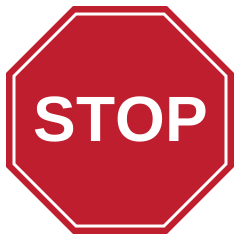 Stop signCome to a full stop, then go when it is safe.
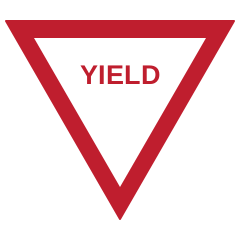 Yield signSlow down and let other traffic go first.
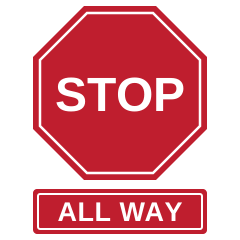 All-way stop signEvery approach to the intersection has a STOP sign.
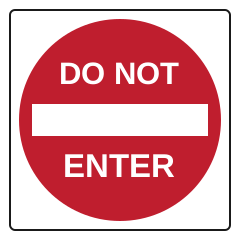 Do not enter signTraffic comes toward you here; do not go in.
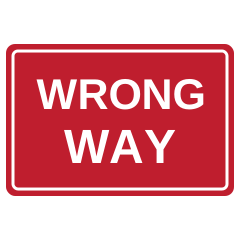 Wrong way signYou are going against traffic: turn around safely.
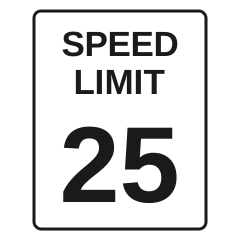 Speed limit signThe maximum speed allowed on this road.
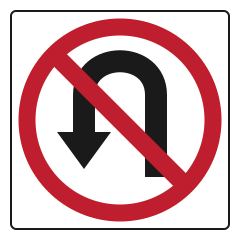 No U-turn signDo not turn around here.
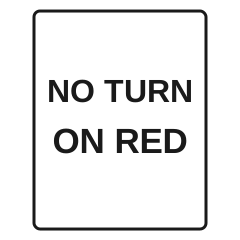 No turn on red signWait for the green before turning.
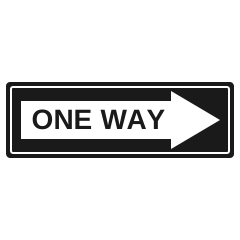 One way signAll traffic moves in the arrow’s direction.
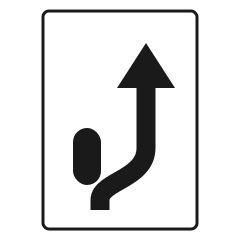 Keep right signPass to the right of the island or obstacle.
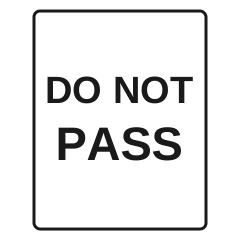 Do not pass signPassing is not allowed here.
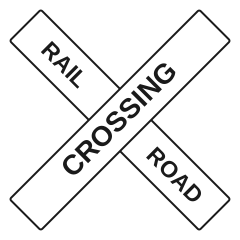 Railroad crossbuck signA railroad crossing: yield to trains.
Warning signs
Signs that warn of a hazard ahead. Most are yellow diamonds; school and pedestrian signs are often fluorescent yellow-green. All warning signs
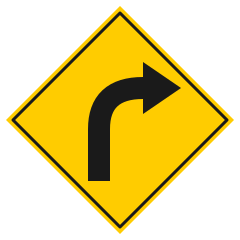 Curve ahead signThe road curves ahead.
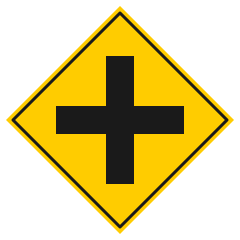 Cross road signAnother road crosses yours ahead.
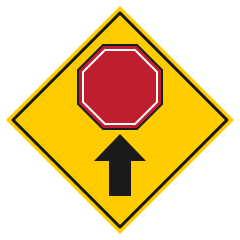 Stop ahead signA STOP sign is coming up.
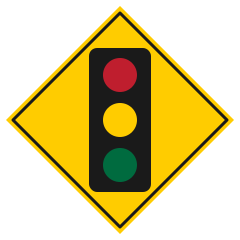 Signal ahead signTraffic lights are ahead.
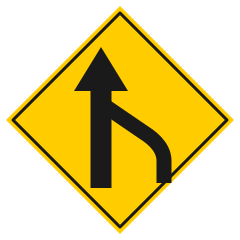 Merge signTraffic will merge into your lane.
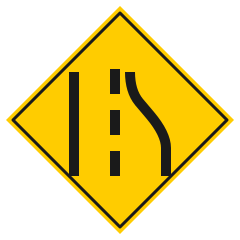 Lane ends signOne lane ends; move over in good time.
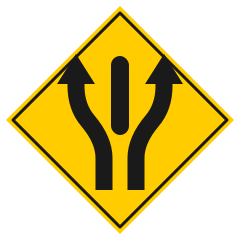 Divided highway signA median will split the two directions.
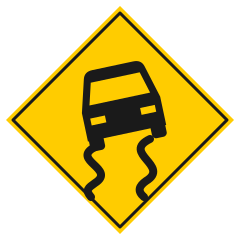 Slippery when wet signThe road can be slippery when wet.
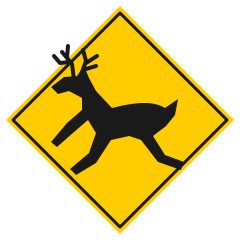 Deer crossing signDeer may be on or crossing the road.
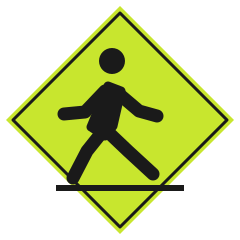 Pedestrian crossing signPeople may be crossing ahead.
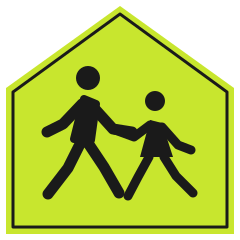 School signA school area, zone or crossing is near.
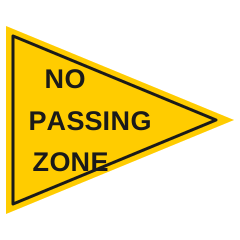 No passing zone signPassing is not allowed from here.
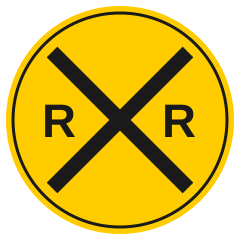 Railroad crossing ahead signA railroad crossing is ahead.
Guide and service signs
Signs that help you find your way and find services: green for directions and distances, blue for services such as hospitals. All guide and service signs
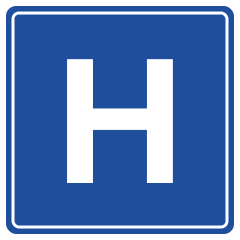 Hospital signThe way to a hospital open 24 hours.
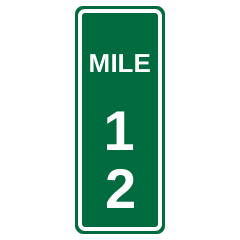 Mile marker signShows where you are along the highway.
Pavement markings
Lines painted on the road. Yellow separates opposite directions; white separates lanes going the same way. All pavement markings
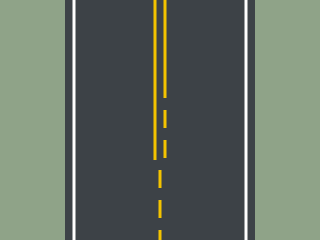 Yellow center linesYellow lines separate opposite directions.
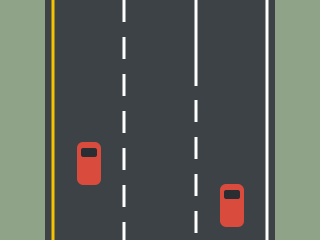 White lane linesWhite lines separate lanes going the same way.
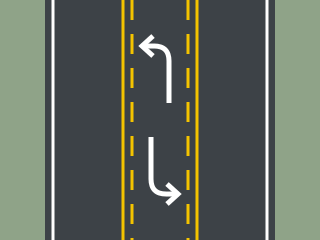 Two-way left-turn laneA center lane for left turns from both directions.
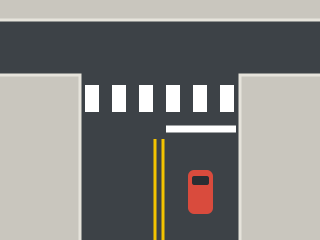 Stop lines and crosswalksWhere to stop, and where people cross.
How to learn them
- Learn the system first: shapes and colors explain most signs before you can read them.
- Answer each sign’s quick question, then read what to expect on the permit test.
- Make it a family quiz: how a DriveQuiz game works.
Sources
- MUTCD 11th Edition, FHWA. FHWA lists the current version as the 11th Edition with Revision 1, dated December 2025
- State MUTCD information, FHWA
- MUTCD 11th Edition, Part 1, General: Section 1D.05, FHWA
- MUTCD 11th Edition, Chapter 2A, General (signs): Section 2A.05, FHWA
Sign pictures are our own simplified drawings of the MUTCD designs, which are in the public domain (MUTCD Section 1D.06). Sources and image credits.