Lane ends sign: what it means
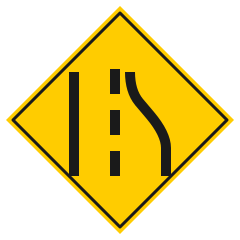
The Lane Ends sign warns that the number of lanes in your direction is about to drop. If your lane is the one ending, find a safe gap and move over.
Last checked against the sources: · Report a mistake
What it means
MUTCD Section 2C.47: the Lane Ends sign and the word sign RIGHT (or LEFT) LANE ENDS warn of a reduction in the number of traffic lanes in the direction of travel.
It is different from the Merge sign: Merge warns of traffic joining from another road, while Lane Ends warns that a lane of your own road is ending.
Where you see it
On multi-lane roads and highways before a lane drops.
A common mistake
Leaving it too late. Signal, check your mirrors and blind spot, and move over when there is a safe gap.
Quick quiz
What is the difference between the Lane Ends and Merge signs?
- Lane Ends: a lane of your road ends. Merge: traffic joins from another road
- They mean the same thing
- Merge is only for trucks
Show answer
A. Lane Ends: a lane of your road ends. Merge: traffic joins from another road. Sections 2C.45 and 2C.47 describe the two different situations. Source: MUTCD 11th Edition, Chapter 2C, Warning Signs and Object Markers: Sections 2C.47, 2C.45, FHWA; MUTCD 11th Edition, FHWA
Compare with
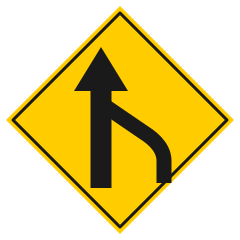 Merge signTraffic will merge into your lane.
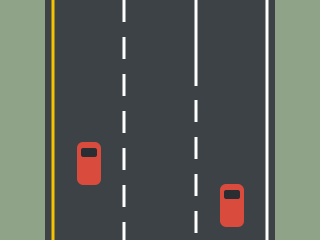 White lane linesWhite lines separate lanes going the same way.
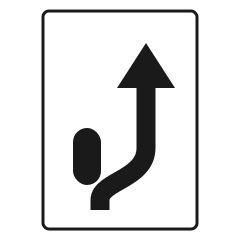 Keep right signPass to the right of the island or obstacle.
Next in warning signs: Divided highway sign. See all warning signs or the full road signs list.
Want to test someone else? Play a road-sign quiz with friends and family.
Sources
- MUTCD 11th Edition, Chapter 2C, Warning Signs and Object Markers: Sections 2C.47, 2C.45, FHWA
- MUTCD 11th Edition, FHWA. FHWA lists the current version as the 11th Edition with Revision 1, dated December 2025
Sign pictures are our own simplified drawings of the MUTCD designs, which are in the public domain (MUTCD Section 1D.06). Sources and image credits.