UK warning signs and their meanings
Warning signs tell you about a hazard ahead so you have time to slow down and get ready. Most are triangles with a red border.
The Highway Code says warning signs are mostly triangular. They do not give orders: they tell you what is coming, such as a junction, a bend, a crossing or a slippery road. Plates underneath can add details, such as the distance to the hazard or what kind of danger it is.
On junction warning signs, the broader line shows the road with priority through the junction (Know your traffic signs).
UK warning signs
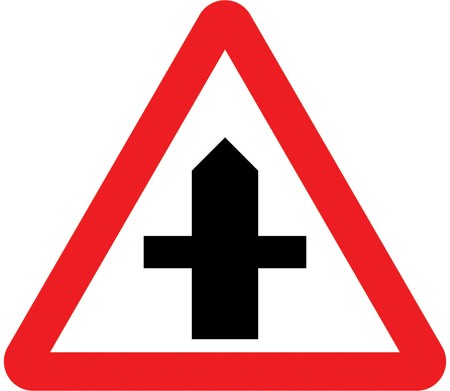 Crossroads signA crossroads is ahead.
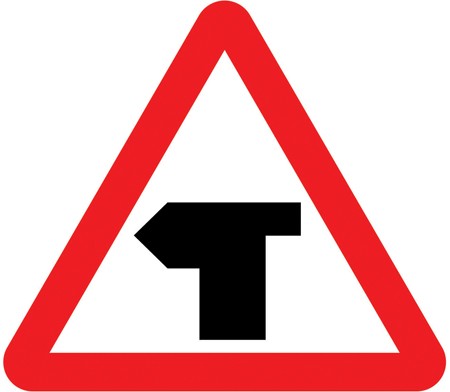 T-junction signYour road ends at a T-junction ahead.
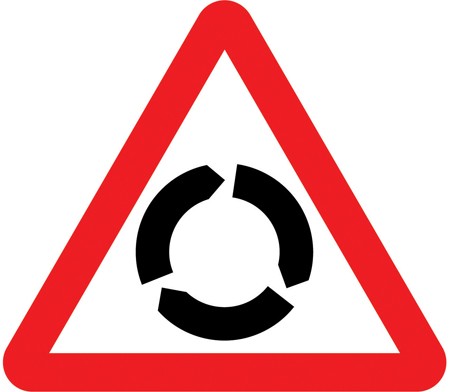 Roundabout ahead signA roundabout is ahead.
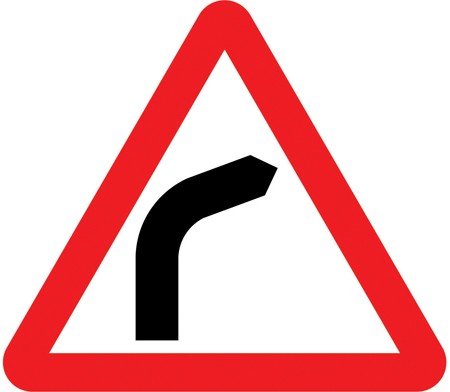 Bend ahead signThe road bends ahead, here to the right.
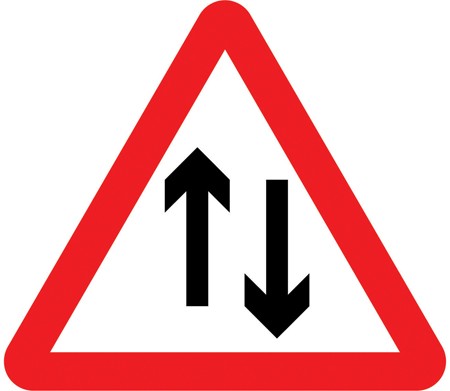 Two-way traffic signTraffic ahead goes in both directions.
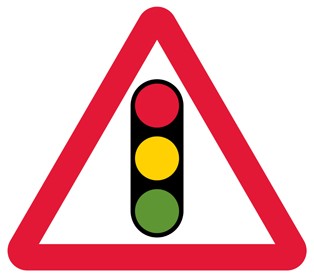 Traffic signals ahead signTraffic lights are ahead.
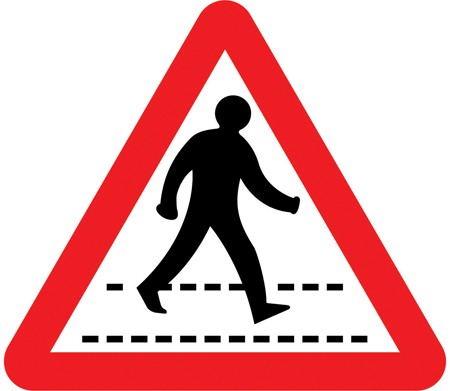 Pedestrian crossing signA zebra or parallel crossing is ahead.
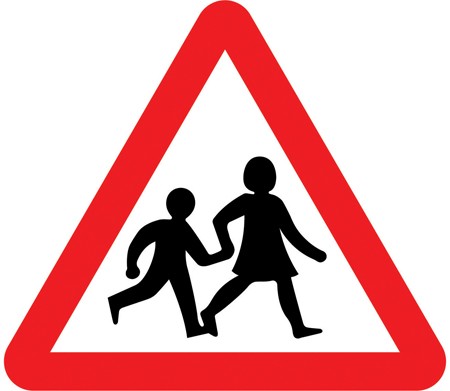 Children going to or from school signWatch for children near a school.
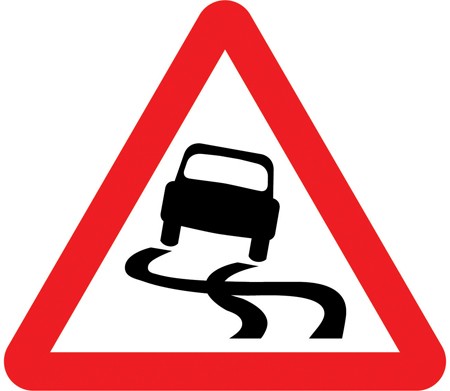 Slippery road signThe road surface ahead may be slippery.
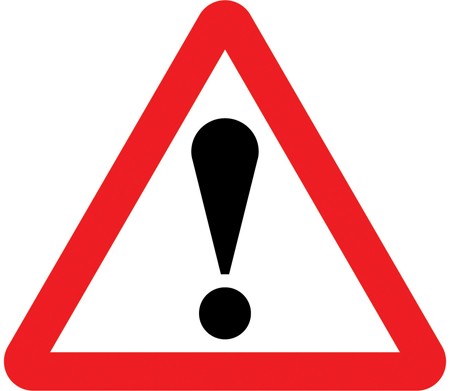 Other danger signA hazard ahead; the plate says what it is.
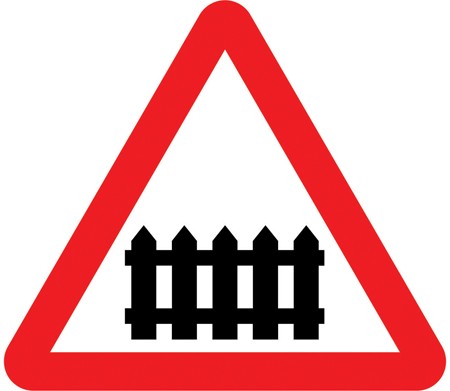 Level crossing with barrier signA railway crossing with gates or barriers is ahead.
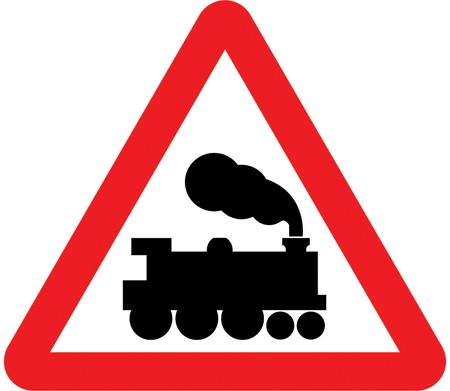 Level crossing without barrier signA railway crossing with no gates or barriers is ahead.
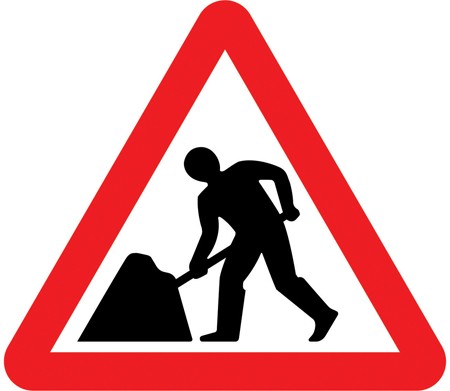 Road works signRoad works ahead.
Test yourself
What shape are most UK warning signs?
- Circles
- Triangles
- Rectangles
Show answer
B. Triangles. The Highway Code says warning signs are mostly triangular. Source: Know your traffic signs: warning signs, GOV.UK; Know your traffic signs: the signing system, GOV.UK; The Highway Code: traffic signs, GOV.UK
Every sign page has its own quick question. For more practice, try the Highway Code quizzes.
More signs and markings
Sources
- Know your traffic signs: warning signs, GOV.UK
- Know your traffic signs: the signing system, GOV.UK
- The Highway Code: traffic signs, GOV.UK
Contains public sector information licensed under the Open Government Licence v3.0. Traffic sign images are Crown copyright, from the Department for Transport. Sources and image credits.