UK road markings and their meanings
Road markings are rules painted on the road. Some carry the same force as a sign, so it pays to know them.
The Highway Code groups road markings by where they are: across the road (such as stop and give way lines), along the road (such as centre lines and double white lines), along the edge (such as yellow lines) and others (such as box junctions).
A broken white line marks the centre of the road: do not cross it unless you can see the road is clear and you wish to overtake or turn off (rule 127). Where double white lines have a solid line nearer to you, you must not cross or straddle it except in a few cases (rule 129).
The pictures on these pages are our own simplified diagrams, not to scale.
UK road markings
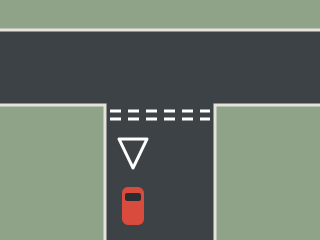 Give way linesDouble broken white lines across a junction.
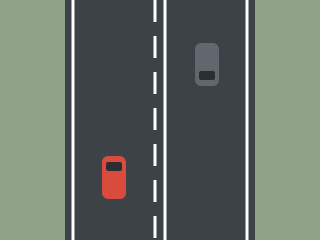 Double white linesThe line nearer to you decides if you may cross.
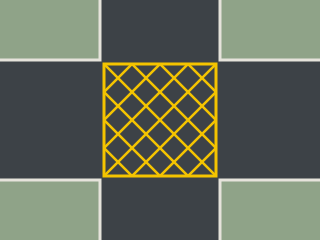 Yellow box junctionDo not go in unless your exit is clear.
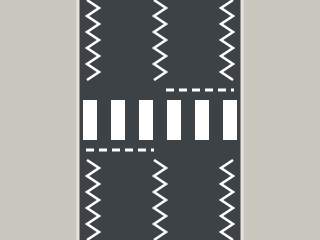 Zigzag linesNo parking, waiting or overtaking near a crossing.
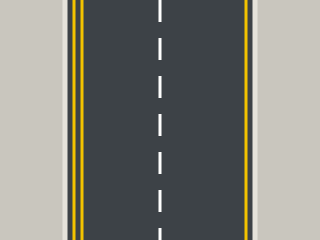 Yellow linesSingle and double yellow waiting restrictions.
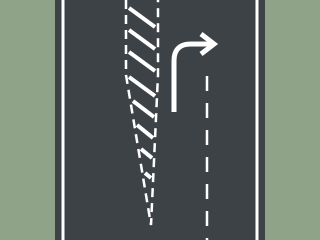 Hatched markingsDiagonal stripes that separate traffic.
Test yourself
What does a broken white line in the middle of a road mark?
- The centre of the road
- A bus lane
- A cycle lane
Show answer
A. The centre of the road. Rule 127: a broken white line marks the centre of the road. Source: The Highway Code: road markings, GOV.UK; Know your traffic signs: road markings, GOV.UK; The Highway Code, rule 127, GOV.UK; The Highway Code, rule 129, GOV.UK
Every sign page has its own quick question. For more practice, try the Highway Code quizzes.
More signs and markings
Sources
- The Highway Code: road markings, GOV.UK
- Know your traffic signs: road markings, GOV.UK
- The Highway Code, rule 127, GOV.UK
- The Highway Code, rule 129, GOV.UK
Contains public sector information licensed under the Open Government Licence v3.0. Traffic sign images are Crown copyright, from the Department for Transport. Sources and image credits.