Give way lines: what they mean
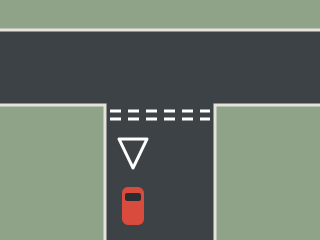
Give way lines, two rows of broken white lines across the end of a road, mean you must give way to traffic on the main road. A white triangle before them warns they are just ahead.
Last checked against the sources: · Report a mistake
What it means
Rule 172: you must give way to traffic on the main road when you come out of a junction with broken white lines across the road. The Highway Code's road markings page adds that the same marking can be used at mini-roundabouts.
At quieter junctions the upright give way sign may not be there (Know your traffic signs), so the lines alone are enough to tell you to give way.
Where you see it
At the end of side roads where they meet a main road, at roundabouts, where you give way to traffic from the right, and at mini-roundabouts.
A common mistake
Looking only for an upright sign. If there are double broken lines across your lane, you must give way even with no sign.
Quick quiz
There are double broken white lines across your lane at a junction, but no sign. What must you do?
- Nothing special
- Give way to traffic on the main road
- Stop every time
Show answer
B. Give way to traffic on the main road. Rule 172: you must give way to traffic on the main road at a junction with broken white lines across the road. Source: The Highway Code, rule 172, GOV.UK; The Highway Code: road markings, GOV.UK; Know your traffic signs: regulatory signs, GOV.UK
Compare with
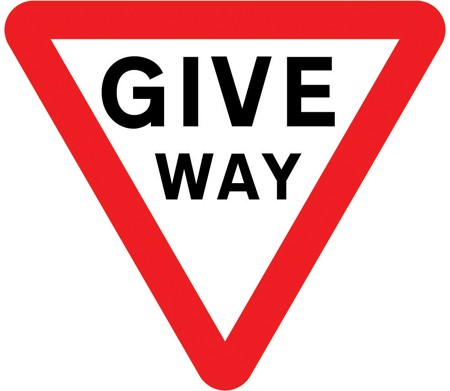 Give way signLet traffic on the major road go first.
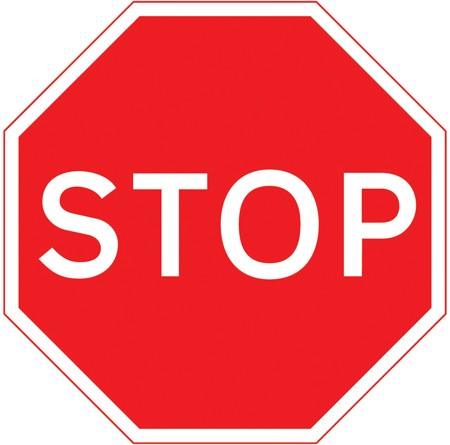 Stop signStop completely at the line, then give way.
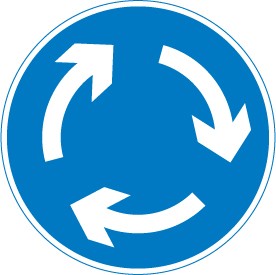 Mini-roundabout signGive way to traffic from your immediate right.
Next in road markings: Double white lines. See all road markings or the full road signs list.
Want to test someone else? Play a road-sign quiz with friends and family.
Sources
- The Highway Code, rule 172, GOV.UK
- The Highway Code: road markings, GOV.UK
- Know your traffic signs: regulatory signs, GOV.UK
Contains public sector information licensed under the Open Government Licence v3.0. Traffic sign images are Crown copyright, from the Department for Transport. Sources and image credits.