Double white lines: what they mean
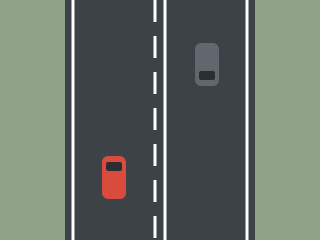
With double white lines, the line nearer to you decides. If it is solid, you must not cross or straddle it except in a few cases. If it is broken, you may cross to overtake when it is safe.
Last checked against the sources: · Report a mistake
What it means
Rule 129: where the line nearer to you is solid, you must not cross or straddle it unless it is safe and you need to turn into a side road or a property next to the road. You may cross if necessary, provided the road is clear, to pass a stationary vehicle, or to overtake a pedal cycle, horse or road maintenance vehicle travelling at 10 mph or less.
Rule 128: where the line nearer to you is broken, you may cross to overtake if it is safe, provided you can finish before reaching a solid white line on your side. Rule 240: you must not stop or park on a road marked with double white lines, even when the broken line is on your side, except to pick up or set down passengers or to load or unload goods.
Where you see it
Where they are needed to prevent overtaking because visibility is restricted, and to separate opposing traffic on steep hills with climbing lanes (Know your traffic signs). In the diagram, traffic in the left-hand lane has the broken line nearest.
A common mistake
Looking at the wrong line. Only the line nearer to you counts; the other one is for traffic coming the other way.
Quick quiz
The line nearer to you is solid and the far one is broken. May you cross to overtake a car doing 40 mph?
- Yes, if the road is clear
- No
- Yes, if you signal first
Show answer
B. No. Rule 129 only allows crossing a solid nearer line in a few cases, such as overtaking a cycle, horse or maintenance vehicle at 10 mph or less. Source: The Highway Code, rule 128, GOV.UK; The Highway Code, rule 129, GOV.UK; The Highway Code, rule 240, GOV.UK; The Highway Code: road markings, GOV.UK; Know your traffic signs: road markings, GOV.UK
Compare with
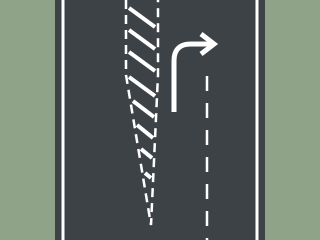 Hatched markingsDiagonal stripes that separate traffic.
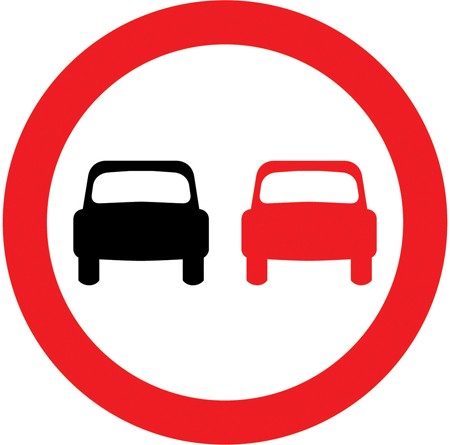 No overtaking signDo not overtake until the restriction ends.
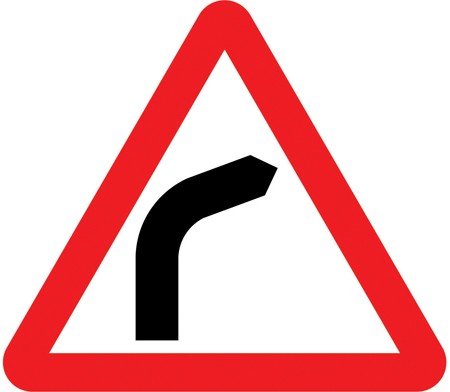 Bend ahead signThe road bends ahead, here to the right.
Next in road markings: Yellow box junction. See all road markings or the full road signs list.
Want to test someone else? Play a road-sign quiz with friends and family.
Sources
- The Highway Code, rule 128, GOV.UK
- The Highway Code, rule 129, GOV.UK
- The Highway Code, rule 240, GOV.UK
- The Highway Code: road markings, GOV.UK
- Know your traffic signs: road markings, GOV.UK
Contains public sector information licensed under the Open Government Licence v3.0. Traffic sign images are Crown copyright, from the Department for Transport. Sources and image credits.