Two-way traffic sign: what it means
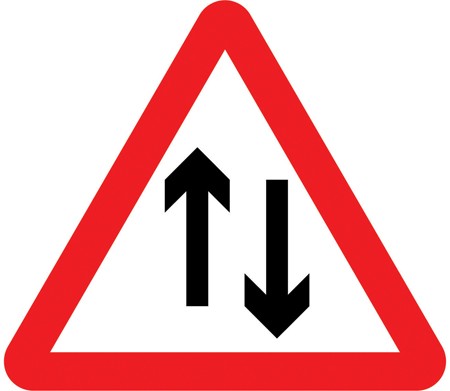
The two-way traffic sign warns that the road ahead carries traffic in both directions, for example where a one-way road or a dual carriageway ends.
Last checked against the sources: · Report a mistake
What it means
Expect oncoming traffic and keep to the left (rule 160). A related sign warns of two-way traffic on a road crossing a one-way road ahead.
Where you see it
Where traffic changes from one-way to two-way, such as at the end of a one-way street or of a dual carriageway.
A common mistake
Staying positioned as if the road were still one-way. Move back to the left and expect vehicles coming towards you.
Quick quiz
You leave a dual carriageway and pass a two-way traffic sign. What should you expect?
- Traffic only in your direction
- Oncoming traffic on the same road
- A roundabout
Show answer
B. Oncoming traffic on the same road. The sign warns that the road ahead carries traffic in both directions. Source: The Highway Code, rule 160, GOV.UK; Know your traffic signs: warning signs, GOV.UK; The Highway Code: traffic signs, GOV.UK; Traffic sign images, Department for Transport, GOV.UK
Compare with
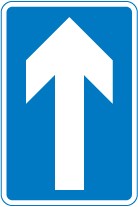 One-way traffic signAll traffic goes in the direction of the arrow.
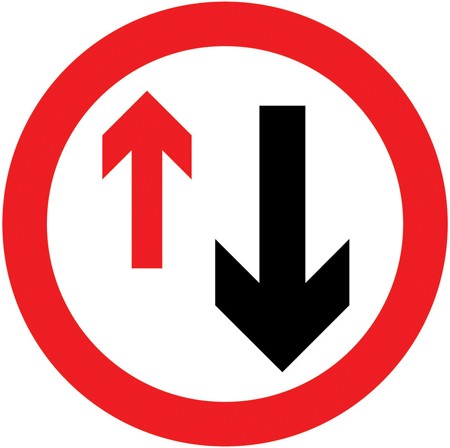 Give way to oncoming vehicles signOncoming traffic goes first through the narrow part.
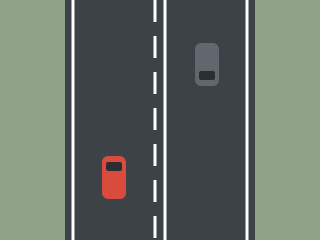 Double white linesThe line nearer to you decides if you may cross.
Next in warning signs: Traffic signals ahead sign. See all warning signs or the full road signs list.
Want to test someone else? Play a road-sign quiz with friends and family.
Sources
- The Highway Code, rule 160, GOV.UK
- Know your traffic signs: warning signs, GOV.UK
- The Highway Code: traffic signs, GOV.UK
- Traffic sign images, Department for Transport, GOV.UK
Contains public sector information licensed under the Open Government Licence v3.0. Traffic sign images are Crown copyright, from the Department for Transport. Sources and image credits.