Traffic signals ahead sign: what it means
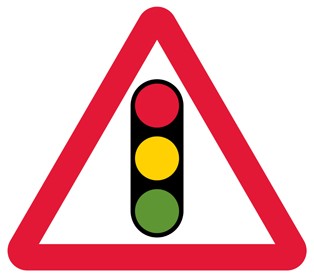
The traffic signals sign warns that there are traffic lights ahead. Approach at a speed that lets you stop if they change.
Last checked against the sources: · Report a mistake
What it means
It is a warning, not the lights themselves. Rule 175: you must stop behind the white stop line unless the light is green. On amber you may go on only if you have already crossed the line or are so close that stopping might cause a collision.
Know your traffic signs also shows a version for traffic signals that operate only at certain times.
Where you see it
On the approach to traffic lights at junctions and some crossings.
A common mistake
Speeding up to beat the lights. Approach ready to stop, because amber means stop unless stopping might cause a collision.
Quick quiz
The lights change to amber as you approach, and you can stop safely before the line. What should you do?
- Speed up and go
- Stop at the line
- Go if nobody is behind you
Show answer
B. Stop at the line. Rule 175: on amber, go on only if you have crossed the line or are so close that stopping might cause a collision. Source: The Highway Code, rule 175, GOV.UK; The Highway Code, rule 176, GOV.UK; Know your traffic signs: warning signs, GOV.UK; The Highway Code: traffic signs, GOV.UK; Traffic sign images, Department for Transport, GOV.UK
Compare with
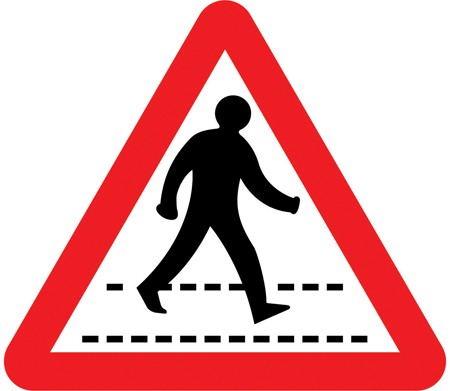 Pedestrian crossing signA zebra or parallel crossing is ahead.
 Yellow box junctionDo not go in unless your exit is clear.
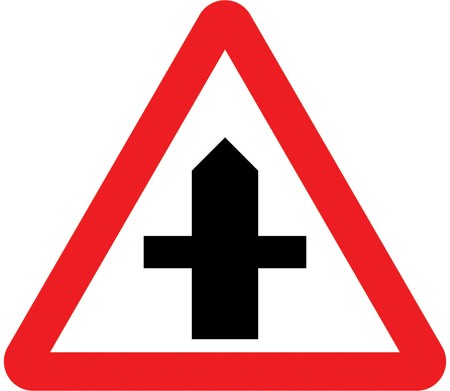 Crossroads signA crossroads is ahead.
Next in warning signs: Pedestrian crossing sign. See all warning signs or the full road signs list.
Want to test someone else? Play a road-sign quiz with friends and family.
Sources
- The Highway Code, rule 175, GOV.UK
- The Highway Code, rule 176, GOV.UK
- Know your traffic signs: warning signs, GOV.UK
- The Highway Code: traffic signs, GOV.UK
- Traffic sign images, Department for Transport, GOV.UK
Contains public sector information licensed under the Open Government Licence v3.0. Traffic sign images are Crown copyright, from the Department for Transport. Sources and image credits.